Reworking this list with a specific brief in mind: think Anne Rice’s Lestat, not a smoky oriental bar. That means less rum, less incense, less warm boozy decadence — and more damp earth, wet stone, faded violets, and moss creeping over a crypt door. The result is a much colder, greener, more melancholic list than a typical “gothic fragrance” roundup, and it’s better for it.
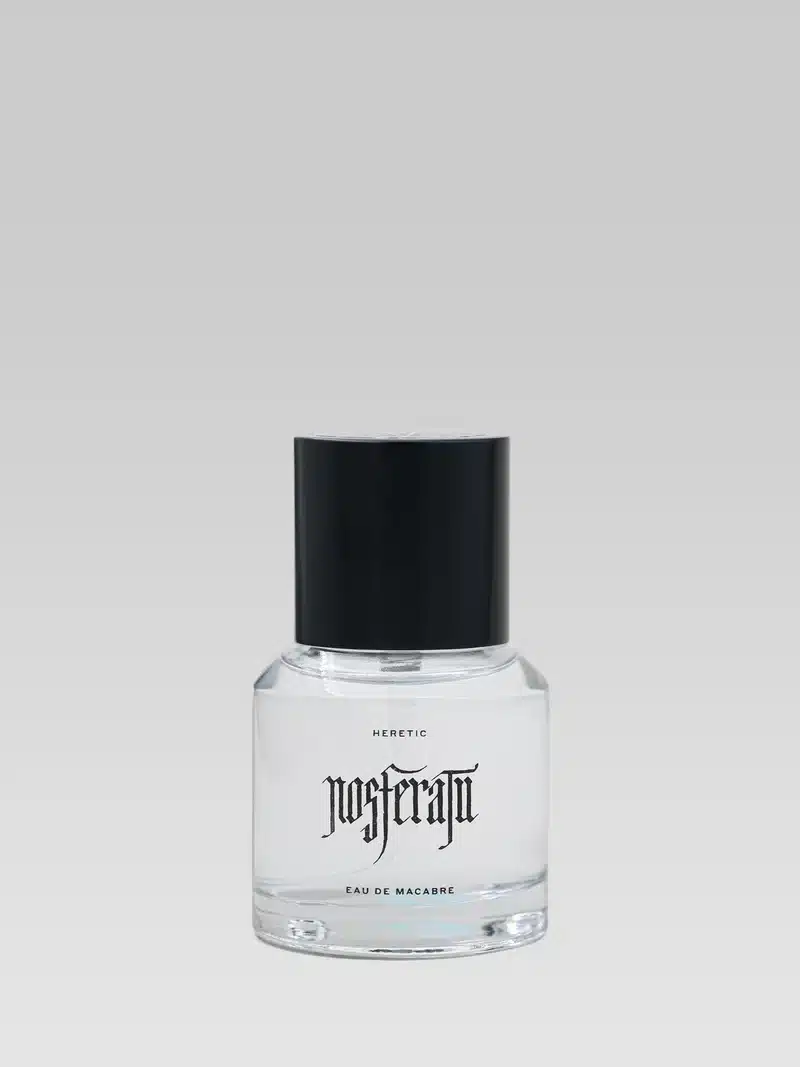
1. Heretic Parfum Nosferatu
The reference point for this entire list. Heretic partnered with Focus Features on this as the official fragrance for Robert Eggers’ 2024 Nosferatu remake — lilac and ambrette up top, petrichor, violet, orris, and cypriol in the heart, resting on vegan ambergris, oud, and labdanum. No blood, no candle wax, no rose-and-smoke cliché. This is the smell of a thunderstorm outside Count Orlok’s castle, and it’s exactly the register the rest of this list is chasing.
2. Guerlain Mitsouko
The archetypal mossy chypre. Peach and oakmoss aging into something that smells like faded silk in an abandoned drawing room. If Lestat kept a bottle from a lover three centuries dead, this is what would still be sitting on the vanity.
3. Ormonde Jayne Ormonde Woman
Built around black hemlock absolute — genuinely poisonous, genuinely rare in perfumery — alongside violet and jasmine over vetiver, cedar, and amber. Reviewers consistently describe it as “a forest after rain.” One of the darkest, greenest compositions in modern niche, and the closest thing to smelling an actual haunted wood.
4. Guerlain Après l’Ondée
The name translates to “after the rain shower.” Violet and iris over hawthorn and orris root, composed by Jacques Guerlain in 1906 and still capturing exactly what it promises — a spring garden after a downpour, wet leaves, pale and melancholic rather than sweet. Genuinely one of the coldest, most delicate florals ever put in a bottle.
5. Papillon Dryad
Liz Moores built this around the forest surrounding her own home, and it shows — galbanum, narcissus, and an overdose of genuine oakmoss, with lavender and cedar underneath. Reviewers reach for exactly the language this list wants: “damp, mossy heart,” “forest floor,” “mist.” This is the most literally graveyard-adjacent fragrance on this list that isn’t Nosferatu itself.
6. Robert Piguet Bandit
Germaine Cellier’s 1944 leather chypre, still uncompromising eight decades later. Bitter galbanum and aldehydes into violet root, oakmoss, leather, and civet. This is the closest thing on this list to an actual vampire countess — feral, green, and openly aggressive rather than seductive in a soft way.
7. Serge Lutens Bois de Violette
Violet, cedar, and violet leaf from Christopher Sheldrake. Cold and purple rather than sweet, with a smoky wood base that keeps it from tipping into candy territory. One of the more genuinely violet-forward fragrances in niche perfumery.
8. Guerlain Vol de Nuit
“Night Flight” — the first fragrance to build around galbanum at this intensity. Green, narcissus-heavy, and powdery-cold rather than warm, with oakmoss and violet running underneath. Reviewers describe it as “wet herbs and a forest floor.” No incense, no orientalism — just green, grey, and melancholic, exactly the mood this list is built around.
9. Quartana Parfums Wolfsbane
Angelica root, fig leaf, and black ginger into absinthe, patchouli, and castoreum, closing on benzoin, sandalwood, and black truffle. Animalic and earthy rather than boozy — this is transformation and undergrowth, not a cocktail hour.
10. Sapphire Studios Count
Built directly around Dracula mythology — leather, pepper, and musk over cedarwood and genuine moss. The one entry here with a literal vampire pedigree, and the moss and cedarwood keep it in step with the rest of the list rather than veering into the oriental territory this rework is deliberately avoiding.
Start with Nosferatu — it’s the clearest statement of the mood this list is built around. If you want the deepest cut with real perfumery history behind it, Mitsouko or Vol de Nuit are both close to a century old and still unmatched at this register.